It started like any normal visit to Mount Rushmore.
Tourists from all over the world had gathered to admire the massive stone faces carved into the Black Hills. Even those who couldn’t name all four presidents still stood in awe of the monument’s sheer scale and history.

Then someone noticed movement on the mountain.
At first, it didn’t make sense. Something was moving along the rock face—slow, deliberate, and completely out of place. As people focused their eyes, panic rippled through the crowd.

There were four faces… and a fifth person.
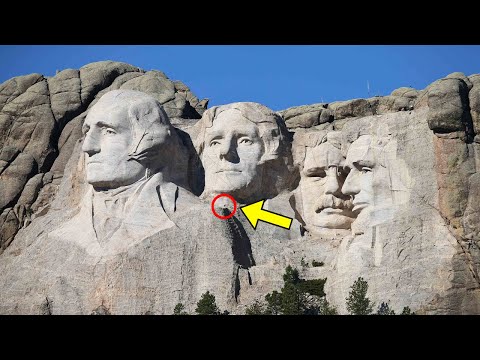
A woman was climbing the monument itself. Not a few steps off a trail—but straight up the stone, dangerously close to the carved presidents. She was heading into the narrow space between George Washington and Thomas Jefferson.

She had no safety gear—and no shoes.
Even seasoned climbers watching from below were stunned. The woman wasn’t wearing a harness, rope, helmet, or even shoes. She moved with unsettling calm, as if the sixty-foot drop beneath her didn’t exist.

Park rangers rushed to respond.
Authorities immediately moved in, trying to communicate with the climber from below. The situation was tense—one wrong move could be fatal, and hundreds of tourists watched in silence.

Her response made things even stranger.
When a ranger asked her to come down, the woman didn’t panic. Instead, she casually asked whether they wanted her to descend quickly… or slowly—while continuing to climb higher.

This wasn’t the first time Rushmore had been climbed.
Over the decades, activists and thrill-seekers had attempted similar stunts. From the American Indian Movement in 1970 to Greenpeace activists rappelling banners down the monument, Mount Rushmore had seen its share of illegal climbs.

But this climb felt different.
The woman showed no visible fear, no urgency, and no clear motive. She climbed until she was roughly fifteen feet from the top—three-quarters of the way up—before authorities decided the situation had gone far enough.

Finally, she agreed to come down.
After another exchange, the woman stopped climbing and carefully descended. Relief washed over the crowd as she reached the ground alive.

She was arrested immediately.
The woman was identified as Alexandria Incontro, a tourist visiting Mount Rushmore with her family. Once on the ground, she was searched, handcuffed, and placed in an ambulance to be evaluated.

Her injuries revealed how risky it was.
Medics found cuts, scrapes, and foot injuries from scaling sharp stone barefoot. It was a miracle she hadn’t fallen—or worse.

No one knew why she did it.
Was it a political statement? A personal challenge? Or simply a reckless thrill? Unlike past climbers, Incontro never clearly explained her motive.

The climb ended—but the questions didn’t.
Alexandria Incontro was taken to Pennington County Jail to await court proceedings. Tourists went home with photos they never expected to take—and a reminder that even iconic landmarks can become scenes of real danger.