A Dog That Didn’t Belong to Anyone
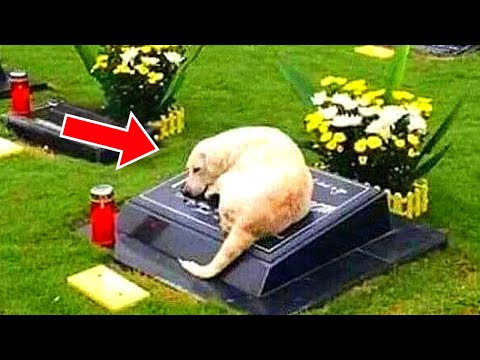
Gabby was used to visiting her grandmother’s grave in silence. Every Friday, she came alone, brought flowers, and sat quietly for nearly an hour, speaking softly as if her grandmother could still hear her. But one afternoon, something felt wrong. A sad-looking Labrador lay curled on a nearby grave, unmoving, soaked by the early drizzle. Gabby knew her grandmother never owned a dog, and no family name on the neighboring stone matched anyone she recognized. The dog didn’t bark or beg—it simply stayed, eyes locked on the ground beneath it, as if guarding something unseen.

Aggression That Came From Protection, Not Fear
When Gabby tried to leave, the dog growled low and showed its teeth, forcing her back into her seat. The moment she sat down again, the growling stopped. The behavior confused her—this wasn’t a territorial animal protecting space. It was guarding something specific. The following week, Gabby returned with her phone, knowing a storm was approaching. The dog was still there, in the exact same position, refusing to move even as rain began to fall harder. Something about its refusal felt desperate, not aggressive.

A Sound No One Expected to Hear
Concerned the dog might die in the storm, Gabby tried offering treats. The dog ate but wouldn’t stand. As rain intensified, Gabby leaned closer—and froze. Beneath the sound of rainfall, she heard something faint and unnatural. A soft, rhythmic noise. Not wind. Not water. She pressed her ear to the ground beside the grave and felt her stomach drop. The sound wasn’t coming from the dog. It was coming from under the grave.

Calling Police as the Storm Turned Dangerous
With wind howling and rain soaking through her clothes, Gabby called the police. They were delayed due to storm emergencies but arrived just as puddles began forming around the graves. At first, the officers didn’t understand the concern—until they heard the sound themselves. Kneeling in the mud, one officer went silent, then looked up with a serious expression. “That’s not an animal,” he said quietly. “And it’s not coming from the surface.”

The Decision to Open the Grave
With water pooling fast and the ground turning to sludge, the officers made a call none of them wanted to make. Digging into a grave was illegal under normal circumstances—but this wasn’t normal. As they dug beside the stone, the dog’s behavior changed. For the first time, it stood up. Its tail wagged. Then it began digging alongside them, whining with urgency. That’s when everyone realized the truth: this dog wasn’t mourning. It was waiting.

What Was Buried Was Still Alive
The officers dug sideways to avoid collapsing the stone. As mud filled with water, Gabby helped scoop it out using bottles from her car. The sound beneath grew louder. Finally, one officer reached his arm deep into the earth and froze. Slowly, carefully, he pulled something out. Gabby gasped as a tiny, shaking puppy emerged—alive, soaked, and crying. The dog rushed forward, licking it frantically.

A Mother’s Desperation Revealed
The digging continued. One by one, six puppies were pulled from beneath the grave, all alive but shivering. The Labrador never left their side. It became clear she had hidden them beneath the gravestone to protect them from predators and people—only to become trapped by the storm. The grave wasn’t sacred ground to her. It was shelter. And she had refused to leave because her puppies couldn’t.

Why the Dog Never Moved
Gabby took all seven dogs home that night, warming them, feeding them, and rushing them to the vet the next day. The mother was chipped. Her owners had been searching for her for days, unaware she had chosen a grave as the safest place she could find. As thanks, they offered Gabby a puppy—an offer she tearfully accepted. The grave was closed again, silent once more. But no one who witnessed it would ever forget why that dog had stayed.